Minister must stop misrepresenting FMD judgment
Saai notes with concern the Minister of Agriculture’s attempt to downplay, reframe and misrepresent the Pretoria High Court judgment on private vaccination against foot-and-mouth disease.
The Minister’s suggestion that events were “largely overtaken” by the publication of the Section 10 scheme is not supported by the facts nor by the judgment. The court considered the newly gazetted scheme and made it clear that it did not provide a substantive defence to the state’s position to prevent the administration of vaccines by farmers and private owners. At best, the scheme provided for voluntary participation. It did not create a lawful general prohibition against privately administered vaccination.
The Minister cannot now create the impression that the court merely confirmed what the department was already doing. The court found the opposite: that the state had failed to show where such a prohibition had been lawfully created, that the state’s opposition delayed a solution in the middle of a national animal health crisis and that private vaccination should be permitted.
The judgment is not a reckless precedent, as the Minister now appears to suggest. It is a reminder of a basic legal principle: government cannot prohibit South Africans from acting lawfully merely because officials prefer to centralise control. In a crisis, the state must use available capacity, not suppress it.
Saai also rejects any suggestion that the judgment allows veterinarians or medicine-control systems to be “bypassed completely”. This is simply not what the order says. The order applies only to vaccines that are lawfully imported or lawfully manufactured. It requires prior written notification to the relevant state veterinary authorities, details of the animals to be vaccinated, details of the persons administering the vaccine, cold-chain information, and sworn post-vaccination reporting. It also expressly allows owners and managers to seek assistance from the state or from private veterinarians.
The Minister’s remarks can therefore only be an attempt to confuse the issue. The court did not open the door to lawlessness. It opened the door to lawful private capacity, proper record-keeping and allowing urgent action where the state has failed to act quickly enough, or at all.
Saai, Sakeliga and Free State Agriculture did not ask that the court take state-procured vaccines away. The court order expressly preserves the state’s power to allocate vaccines procured by the state according to its own strategies and priorities. The point of the case was never to weaken the state’s role. It was to stop the state from implementing its unlawful policy to block farmers, veterinarians, lawful importers and private-sector role players from helping to fight the disease.
The Minister boasts about the participation of organised agriculture in his state-controlled response to the disease but fails to explain that he only involves organisations and voices who would never question his approach of state centralisation. He has still not bothered to explain why it took nine months to get South Africa’s strains to the Pirbright Laboratory and why it took six months to publish a Section 10 scheme.
If the Minister is proud that the government has procured millions of vaccine doses, then he should also explain why it took litigation to force recognition of the private sector’s right to procure and administer vaccines to safeguard their livelihoods. The question is not whether government should play a role. Of course it should. The question is why the Minister and his department fought so hard to prevent others from helping.
The court’s answer was clear. The state could not point to a lawful prohibition. The Section 10 scheme did not cure that problem. Private vaccination would not undermine the fight against FMD. On the contrary, the court found that it would assist in that fight.
Maybe the time is overdue for the restructuring of the Department of Agriculture to appoint senior managers who understand the crisis, care about the consequences, and are committed to delivering results in the battle against foot-and-mouth disease, whether in the animal health, human resources, product registration, or legal divisions.
This judgment should have been welcomed by the Minister as an opportunity to finally place South Africa’s livestock industry on the front foot. Instead, his public commentary risks creating further uncertainty, mistrust and delay.
Saai calls on the Minister and the Department of Agriculture to stop spinning the judgment, stop threatening imaginary regulatory consequences, and to undertake to cooperate with the judgment.
Farmers have already paid too high a price for state hesitation, centralisation, and delay. South Africa does not have the luxury of another round of bureaucratic defensiveness while foot-and-mouth disease continues to spread.
The court has spoken. The law is clear. The private sector must now be allowed to help defeat FMD.
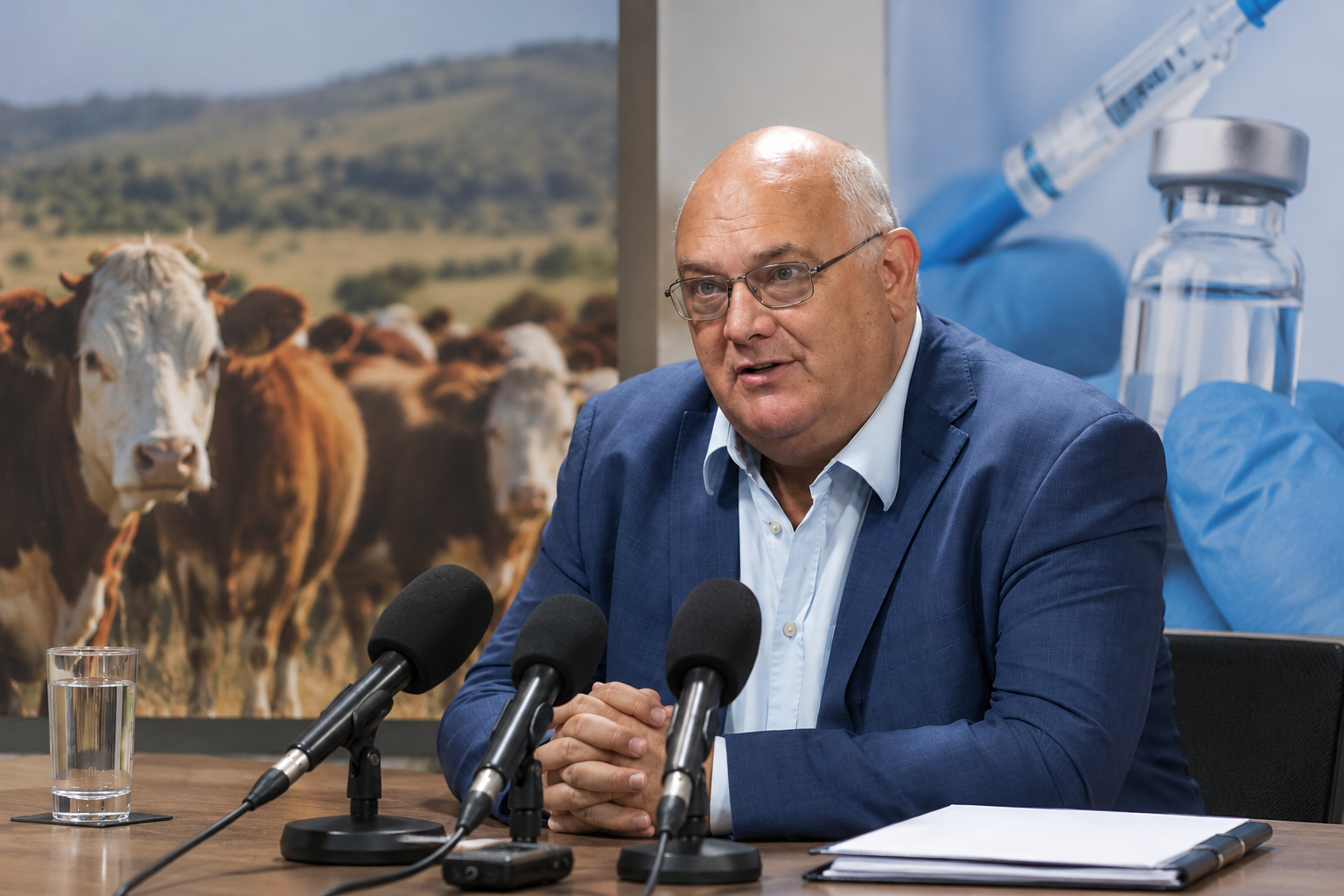
**Voice note added of Francois Rossouw, Saai ceo