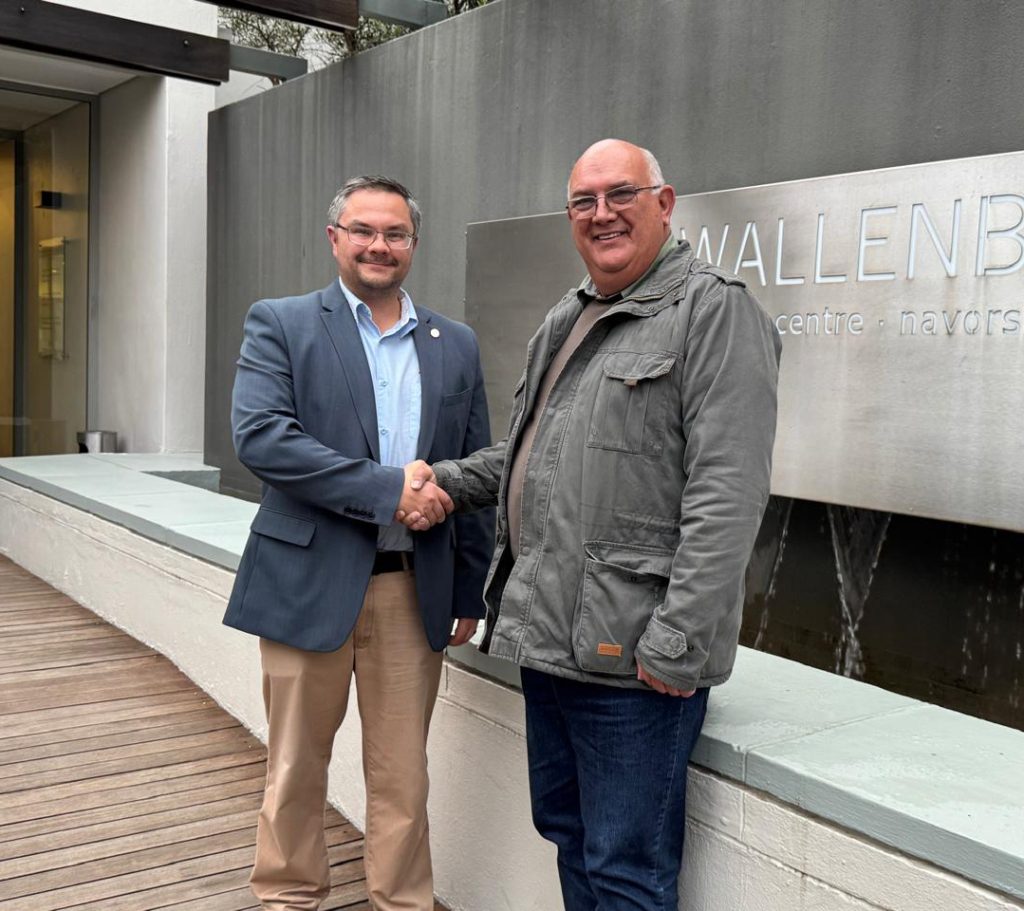
Community Building and Youth Development Central in New Partnership Between Saai and Cape Forum
The Cape Forum and the Southern Africa Agri Initiative (Saai), an agricultural interest network by farmers for farmers—committed to protecting and promoting the rights, values, ideals, and needs of family farmers in the primary production sector—have entered into a cooperation agreement to benefit the communities each institution serves.
This partnership will enable brown* learners and young workers to participate in and connect with national projects and gain exposure to international opportunities. This collaboration is planned for early next year.*
Saai and the African Farmers’ Association of South Africa (AFASA) are the two agricultural organisations currently representing South Africa at the World Farmers’ Organisation, an international forum for agricultural representatives. Saai, possibly the largest agricultural institution in South Africa and the largest in Zimbabwe, has already demonstrated that their focus on family farmers makes them a valuable partner for every community in Southern Africa. Saai is already actively involved, together with AfriForum and RRAIN (Resilient Regenerative Agricultural Initiative), in turning words into action when it comes to community building and cooperation. These projects are especially focused on black rural development. This makes Saai the sought-after agricultural interest network for all cultures, languages, and communities due to its inclusive (unique family-focused) approach.
Saai’s focus areas include land reform, security risks, restrictive trade measures, climate change, lack of agricultural development, training, energy, resources, water, rural infrastructure, technology, and access to financing, making them the most valuable partner in agriculture.
- As an interest network, it is Saai’s duty to play an active role in implementing practical strategic solutions for these and other agricultural challenges, rather than merely relying on hopes of policy influence.
- Saai, as a vehicle to pursue this goal, is not a traditional agricultural union, but rather a network rooted in cooperation and the application of modern technology and pure principles.
According to Bernard Pieters, Head of Community Activation at Cape Forum, they want to use this partnership to provide more brown people access to a future in agriculture, nationally or internationally, by creating networking opportunities. “They say it takes a community to raise a child. We are part of the community that must prepare today’s children for a bright future—a future where there are fair opportunities for everyone willing to work hard. It is a privilege for us to work with Saai and to combine our resources to ensure the success of this agreement,” Pieters concludes.
Dr Theo de Jager, chairperson of Saai’s board, says their partnership agreement with Cape Forum is a necessary extension of their rapidly growing footprint in the Western Cape, which has especially increased in scale and depth in 2025. “Our numbers are also growing among Coloured farmers, particularly in the fruit, rooibos tea, and sheep industries, and hence the need to join hands with Cape Forum,” says De Jager. “Saai’s responsibility towards family farmers extends beyond technical agricultural matters. It also concerns community interests.”