Foot and Mouth Disease Now Demands a Regional Approach
With the first confirmed outbreak of foot and mouth disease (FMD) in Lesotho, there is no realistic alternative left but to adopt a regional approach to combating the disease.
Apart from Namibia, there is currently no other country bordering South Africa where outbreaks outside controlled areas have not been confirmed. Namibia and Botswana follow strict, disciplined protocols to protect their red meat export status, but the movement of livestock across borders and domestically from affected districts into the rest of the region is poorly controlled.
Even if the blanket vaccination programme South Africa has now, is announced successful, the cost and effort involved will be wasted unless it is matched by effective traceability programmes and consistent movement control.
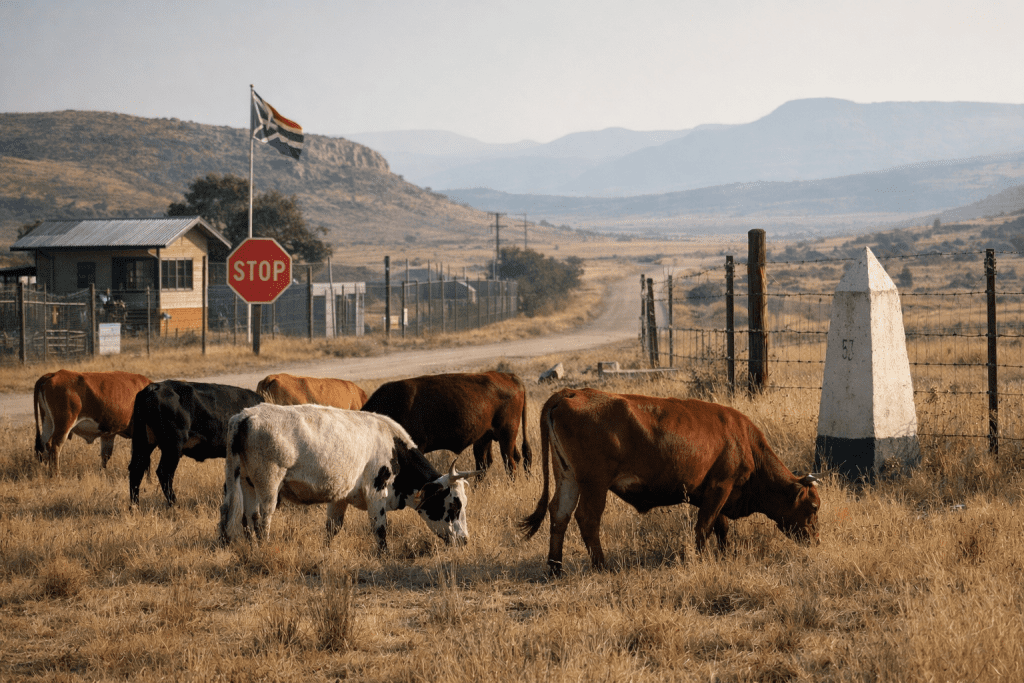
Ongoing, poorly controlled movement of livestock across the Lesotho border, particularly within the context of the stock theft problem that has caused major losses in the Eastern Free State for more than two decades, has inevitably contributed to the outbreak of FMD in Lesotho.
Structure follows strategy, and the greatest challenge in combating FMD remains the clear allocation of responsibility and accountability in multilateral and multi sector programmes. We need to rethink the structures through which agreements are reached across borders and also domestically, between different sectors of livestock owners and businesses, on how the disease will be eradicated in practical terms.
Simply leaving the problem to SADC could be catastrophic. SADC has never impressed with the implementation of regional policy. In 14 years, SADC has still not managed to restore the operation of its tribunal in Windhoek, despite constitutional courts in several member states having ruled that the failure to appoint judges is unlawful. A civil initiative involving farmers, veterinarians and businesses across the meat and dairy value chains, funded, supported, and monitored by governments, has a better chance of success.
Locally in South Africa, the structures required to roll out the vaccination programme are also inadequate. The state does not have the necessary capacity or expertise, and it bears direct responsibility for the outbreak and spread of the disease.
RMIS, which is granted wide powers in the draft Section 10 application to manage the counter strategy, is viewed with deep suspicion by farmers. RMIS is perceived to have been captured and controlled by feedlots, and not to act consistently in the best interests of primary producers. Farmers are also deeply uncomfortable with RMIS’s self-appointed role as gatekeeper of vaccination programmes, because key role players, organisations and value chain partners are regularly excluded at RMIS’s insistence.
A single infected animal can destroy a country’s FMD status, and farmers experience exclusivity and secrecy as signs of a lack of understanding of the nature and scale of the problem.
If a credible, politically neutral and effective structure is to coordinate the counter strategy, it cannot be RMIS. When FMD escalated in April 2025 and began spreading like a wildfire, RMIS’s board imposed a ban on communication with farmers, leaving the PRO and veterinarians to try to interpret facts and plans. RMIS communication has never been strong, and attempts to engage with them are routinely postponed, cancelled or ignored.
A more transparent, representative, neutral and effective structure must be established to coordinate the fight against FMD in South Africa and across the region, especially in the absence of state capacity.